



Epoxy vs. Urethane Floor Coatings for Manufacturing Plants: Which One’s Right for You?
Posted Aug 11, 2025 by Dave Scaturro
Walk into any busy manufacturing plant and look down—those floors take more abuse in a week than most residential floors do in a lifetime. Forklift traffic, dropped tools, chemical spills, heavy machinery… it’s a battlefield. That’s why a quality floor coating isn’t just “nice to have”—it’s the armor that keeps your concrete from cracking, staining, or eroding under all that punishment.
Two of the heavyweights in industrial flooring are epoxy and urethane (also called polyurethane). Both are tough, both are popular, but they’re not the same—and picking the wrong one could mean a shorter lifespan or more maintenance than you bargained for.
Epoxy: The Workhorse
If you want a floor that can handle serious loads, epoxy’s got your back. It’s a two-part system that cures into a dense, hard surface—perfect for handling the weight of forklifts, pallet jacks, and stationary equipment.
Why plants choose epoxy:
Excellent adhesion to concrete
High compressive strength for heavy loads
Chemical resistance for oils, solvents, and some acids
Seamless, easy-to-clean surface
Best fit: Heavy manufacturing, machine shops, warehouses with extreme point loads, and facilities that need a rock-solid base coat under other systems.
Urethane: The Finisher
Think of urethane as the final layer of protection—tough, flexible, and great at shrugging off things that can dull or damage epoxy. It’s especially good in environments with temperature swings or constant foot traffic.
Why plants choose urethane:
Superior UV resistance (epoxy can yellow over time)
More flexible—better at handling impact without chipping
Excellent chemical resistance, especially to acids and alkalis
Withstands thermal shock (hot water washdowns, sudden temp changes)
Best fit: Food and beverage plants, chemical processing facilities, pharma clean rooms, and any space exposed to sunlight or frequent washdowns.
The Winning Combo
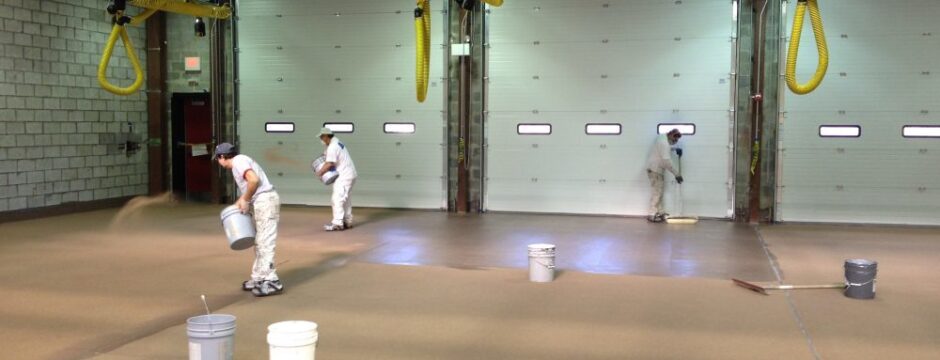
Here’s a secret: In a lot of industrial settings, the best choice isn’t one or the other—it’s both. We often install epoxy as the base for strength and adhesion, then top it with urethane for UV stability, chemical resistance, and a longer overall lifespan.
This combo can give you a floor that lasts 10+ years with minimal touch-ups—assuming it’s installed right and maintained properly.
Prep Still Rules the Game
No matter which coating you choose, it’s worthless without proper surface prep. That means removing oils, repairing cracks, and profiling the concrete so the coating bonds like it’s supposed to. At Alpine Painting, we use diamond grinding, shot blasting, or both—depending on the condition of the slab—to make sure your investment sticks around.
Bottom Line
Epoxy brings the muscle, urethane brings the finesse. If your plant needs a floor that can stand up to years of abuse, the right choice might be one, the other, or a combination—depending on your operation. The key is matching the coating to your environment and usage, not just picking the cheapest option.
Need help choosing the right floor system for your facility?
Contact Alpine Painting & Sandblasting Contractors today. We’ll assess your space, your workflow, and your budget to design a coating system that keeps your floors—and your operations—running at peak performance.